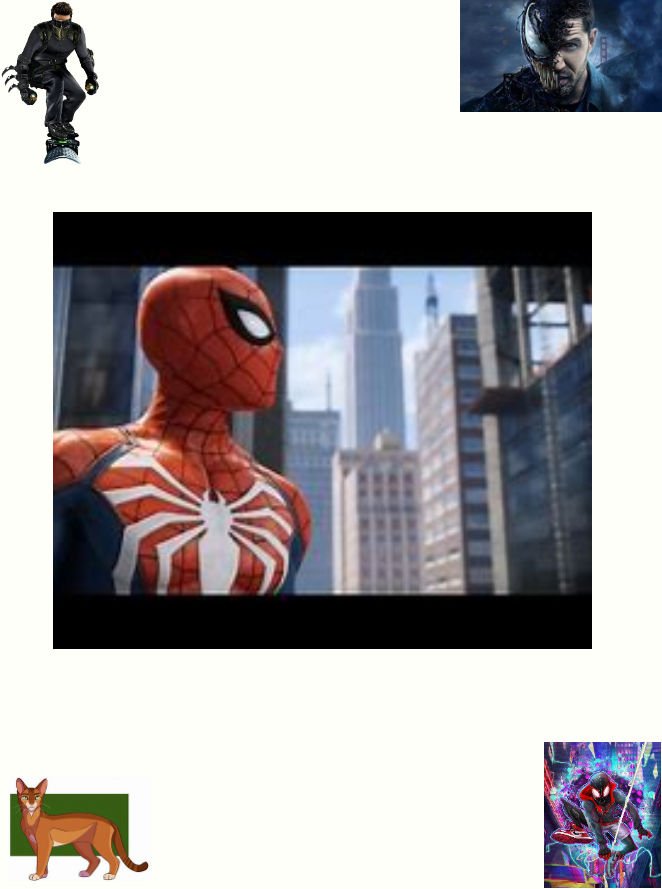
The enduring appeal of Spider-Man isn't just about the web-slinging acrobatics or the iconic red-and-blue suit. It's deeply rooted in the incredibly human drama of Peter Parker’s life, a tapestry woven with the threads of his complex relationships. When we delve into Analyzing Spiderman's Villains, Allies & Supporting Cast, we're not just dissecting comic book characters; we're exploring the very foundations of his heroism, his humanity, and the relentless challenges he faces. It’s a compelling narrative built on the people who uplift him, challenge him, and sometimes, utterly break him.
This isn't a simple hero's journey; it's a saga shaped by a remarkable ensemble. From the profound wisdom of a departed mentor to the tragic descent of a best friend, Peter's world is rich with characters who elevate his story beyond mere superheroics. They are the mirror reflecting his choices, the source of his greatest joys, and the wellspring of his deepest sorrows, truly making his universe one of the most relatable and captivating in all of fiction.
At a Glance: What We'll Explore
- The Core Influences: Understanding Peter Parker's immediate family and their indelible impact on his moral compass.
- Early Connections: Revisiting the classmates and academic figures who shaped Peter during his formative years.
- Complex Relationships: Examining the nuanced dynamics with friends who become adversaries and family who offer ambiguous support.
- Identity & Reflection: Exploring how Peter's clones and duplicates reveal different facets of his character and struggles.
- The Fabric of His World: Appreciating how every character, major or minor, contributes to the rich, human narrative of Spider-Man.
The Heartbeat of the Web: Why Spider-Man's Connections Define Him
Spider-Man’s greatest strength isn't his proportional strength of a spider, nor his unparalleled agility, or even his uncanny Spider-Sense. It's Peter Parker himself – the struggling orphan, the perennial underdog, the man burdened by incredible responsibility. And that burden, that struggle, that humanity, is amplified and defined by the people around him.
Imagine a hero who only fought villains in a vacuum. Interesting, perhaps, but ultimately hollow. Peter's story resonates because it's grounded in domesticity, in friendship, in love, and in profound loss. His supporting cast provides the stakes, the emotional anchors, and the moral quandaries that make his adventures compelling. They are the reason he fights, the people he protects, and the constant reminder of the "great responsibility" he carries. Every villain's attack, every alleyway brawl, every world-saving feat takes on deeper meaning when we understand the lives of the people Peter is fighting for.
The Unshakeable Foundation: Peter Parker's Family and Mentors
No hero operates in isolation, and Peter Parker's life is fundamentally shaped by the family that raised him and the lessons they imparted. These aren't just background characters; they are the pillars upon which Spider-Man's entire ethical framework is built.
Uncle Ben: The Immutable Moral Compass
If there is one character whose presence—or rather, absence—defines Spider-Man, it is Benjamin "Ben" Parker. First appearing in Amazing Fantasy #15 (August, 1962), Uncle Ben wasn't just a father figure to Peter; he was the source of the iconic adage: "With great power comes great responsibility." His tragic death, a direct consequence of Peter's youthful arrogance in neglecting to stop a burglar, cemented Peter's resolve to use his abilities for good. Ben, a World War II veteran, stands as one of Marvel's few characters to remain permanently deceased, underscoring the irreversible nature of his impact and the weight of Peter's original sin. His legacy is the constant moral compass guiding every difficult decision Peter makes.
Aunt May: Fierce Love, Unyielding Support
Where Ben provided the moral framework, Maybelle "May" Parker offers the emotional anchor. Also introduced in Amazing Fantasy #15 (August, 1962), Aunt May is fiercely protective of Peter, often seeing him as her delicate, sickly nephew. Initially unaware of his dual identity, she eventually discovered it, a revelation handled with various narrative retcons over the years. May is a woman of strong will, often acting as a "Mama Bear" when Peter's well-being is threatened. She was happily married to Ben and later found love again, marrying J. Jonah Jameson's father, which added another layer of complexity to Peter's life. May is also famously a "Shipper on Deck," subtly (or not-so-subtly) nudging Peter towards Mary Jane Watson, highlighting her desire for Peter's happiness and stability. Her unwavering love and resilience are a constant source of inspiration and, at times, complication for Peter.
Richard and Mary Parker: The Spy Parents and Lingering Questions
Peter's biological parents, Richard and Mary Parker, first appeared in The Amazing Spider-Man Annual #5 (November, 1968). Their story provides a poignant backdrop to Peter's orphaned existence. They weren't ordinary citizens but spies, working for organizations like the CIA and S.H.I.E.L.D., a revelation that often casts a shadow of mystery over Peter's own extraordinary life. Tragically, they were killed in a plane accident orchestrated by a villain known as The Finisher when Peter was young, leaving him in the care of Ben and May. Richard, incidentally, was Ben's younger brother, connecting Peter's two paternal figures even more deeply. Their legacy occasionally resurfaces, adding layers of intrigue and unresolved questions to Peter's personal history.
Teresa Parker: A Sister's Ambiguous Bond
A more recent addition to Peter's familial web is Teresa Parker, introduced in Amazing Spider-Man: Family Business #1 (June, 2014). Presented as Peter's long-lost sister, Teresa is a non-powered CIA agent skilled in combat. Her biological relationship to Peter has been a subject of ambiguity and frequent retcons, reflecting the fluid nature of comic book continuity. Despite the uncertainty surrounding her exact lineage, she acts as a Secret-Keeper for Peter's identity, providing a unique ally who understands the covert world. Her presence offers Peter a chance at a sibling connection he never knew he had, albeit one fraught with espionage and questions of truth.
Mary Jane Watson's Circle: Extended Family and Deeper Roots
While not Peter's immediate family, Mary Jane Watson's own relatives significantly contribute to her character development, which in turn influences her relationship with Peter and his world. Understanding her background helps us appreciate the strength and vulnerabilities she brings to Peter’s life.
- Phillip Watson: MJ's estranged father, first appearing in Amazing Spider-Man #259 (September, 1984), was initially depicted as an abusive novelist who failed in his career. His complex character later saw him become kinder, but his early influence contributed to MJ's independent and sometimes guarded nature.
- Gayle Watson-Byrne: MJ's older sister, introduced in Amazing Spider-Man #246 (August, 1983), offers a glimpse into Mary Jane's family dynamics and the sibling relationship that shaped her.
- Anna May Watson: Aunt to Mary Jane and a close friend to Aunt May Parker, Anna May (The Amazing Spider-Man #15, August, 1964) serves as a "Maiden Aunt" figure and, much like Aunt May, a "Shipper on Deck" for Peter and MJ. Her connection to both families bridges their worlds, fostering the environment for Peter and Mary Jane's romance to blossom.
The Echoes of Adolescence: Midtown High & ESU Influences
Before he was Spider-Man, Peter Parker was simply Peter, a brilliant but socially awkward teenager navigating the halls of Midtown High and later, the campus of Empire State University. The people he encountered during these formative years profoundly influenced his understanding of friendship, rivalry, and the everyday struggles of life, shaping the hero he would become.
Liz Allan: From First Crush to Corporate Complications
Elizabeth "Liz" Allan, introduced in Amazing Fantasy #15 (August 1962), was one of Peter's earliest romantic interests. Her journey, however, extended far beyond high school. She eventually married Peter's best friend, Harry Osborn, and became the mother of Normie Osborn. Later, she ascended to the role of CEO of Alchemax, a powerful corporation. Her life was often tangled with the manipulations of Norman Osborn, Harry's father, which saw her character exhibit a "Heel–Face Revolving Door" tendency, oscillating between being an ally and an unwitting instrument of darker forces. Liz represents Peter's past, present, and the complex web of relationships that define his world.
The Shifting Sands of Friendship: Peter's Early Classmates
Peter's high school years were, for many, a relatable saga of navigating cliques, bullies, and the quest for acceptance. His classmates, though seemingly minor, painted a vivid picture of the "normal" life he both longed for and sacrificed.
- Sally Avril (Bluebird): A classmate from Amazing Fantasy #15 (August, 1962), Sally sought fame and attempted to become a gadget-based superhero. Her ambition led to tragedy, as she died in a car accident while speeding to photograph Spider-Man. Interestingly, a clone of her later appeared and survived the Dead No More: The Clone Conspiracy event, highlighting the bizarre turns Peter's life often takes.
- Seymour O'Reilly: Another childhood friend from Amazing Fantasy #15 (August, 1962), Seymour became a bully to gain favor with Flash Thompson. His story took a dark turn when he was killed by Venom after discovering Peter's secret identity in Marvel Knights Spider-Man #7, a stark reminder of the dangers inherent in Peter's double life.
- Charlie Murphy: Appearing in Amazing Spider-Man #8 (January, 1964), Charlie was another childhood friend who abandoned Peter for Flash Thompson's popular group. He often represents the path of "normalcy" Peter might have had, emphasizing the sacrifices he made.
- Jason Ionello: A prankster and classmate from Untold Tales of Spider-Man #1 (September, 1995), Jason was part of Flash Thompson's group. He was the driver in the car crash that killed Sally Avril, leading to "Survivor Guilt" and illustrating the ripple effects of seemingly small actions.
- Brian "Tiny" McKeever: Flash Thompson's physical enforcer (Untold Tales of Spider-Man #1, September, 1995), Tiny's bullying was revealed to stem from parental abuse. He later reformed, becoming head of security at Empire State University, showcasing a path to redemption that often mirrors Peter's own hopes for others.
Academic Connections: Debra Whitman & Dr. Evan Swann
Beyond high school, Peter's university life introduced him to figures who offered intellectual and, at times, romantic connections.
- Debra Whitman: A university secretary and one of Peter Parker's love interests, Debra first appeared in The Amazing Spider-Man #196 (September 1979). She was one of the few individuals to deduce Peter's identity independently, highlighting her keen perception. Despite her struggles, including an abusive marriage, she eventually found happiness, representing the possibility of a normal life that Peter often yearned for.
- Dr. Evan Swann (Captain Universe): A physics professor at ESU and Peter's tutor, Dr. Swann was introduced in Amazing Spider-Man #310 (December 1988). What made him truly unique was his status as a wielder of the cosmic Captain Universe powers, momentarily connecting Peter to a larger, universal tapestry of heroism and responsibility.
Harry Osborn: The Tragic Heir to a Dark Legacy
Of all Peter's friends, Harold Theopolis "Harry" Osborn stands out as the most complex and tragic. First appearing in The Amazing Spider-Man #31 (December 1965), Harry was Peter's best friend and roommate at ESU. However, his life was overshadowed by his father, Norman Osborn, the original Green Goblin. Following his father's perceived death, fueled by drug addiction and deep-seated resentment towards Peter, Harry himself became the second Green Goblin. His descent into villainy, particularly his struggles with drug use, was a "Genre Turning Point" for comics, bringing a new level of psychological realism to the medium. Harry died multiple times throughout his history, only to be resurrected (and later revealed as a clone) via the controversial "One More Day" retcon. Harry embodies the dark parallel to Peter – a good man corrupted by legacy, mental illness, and misplaced anger, representing one of Spider-Man's most personal and heartbreaking adversaries.
Gwen Stacy: A Brief, Beloved Mention
While the context only lists Gwen Stacy as an ESU student, her name resonates deeply within Spider-Man lore. She represents a pivotal emotional cornerstone in Peter's life, a bright, intelligent woman who captivated his heart during his university years. Her presence as an ESU student marked a significant chapter for Peter, offering a glimpse into a potential future filled with happiness and normalcy, a future often disrupted by the inherent dangers of his costumed life.
The Shifting Sands of Identity: Clones, Duplicates, and Internal Conflicts
No analysis of Spider-Man's supporting cast would be complete without acknowledging the often-mind-bending narratives surrounding Peter's own identity. The introduction of clones and duplicates has repeatedly forced Peter—and the reader—to question what it truly means to be Spider-Man, and who ultimately bears the burden of his responsibilities. While not "villains" in the traditional sense, some of these duplicates embody aspects of Peter's struggles, becoming antagonists by their very existence.
The Spider-Clones: Ben Reilly, Kaine Parker, and the Identity Crisis
Characters like Benjamin "Ben" Reilly and Kaine Parker are pivotal to Peter's ongoing saga of identity. These "Spider-Clones" — alongside others like Spidercide and Itsy Bitsy, and the general concept of "Spider-Clones" — forced Peter to confront existential questions about his own uniqueness and worth. Ben Reilly, in particular, spent years believing he was the original Peter Parker, while Kaine represented a more flawed, often darker, genetic duplicate. Their existence challenged Peter's sense of self, blurring the lines between hero, copy, and corrupted reflection. These clones serve as complex allies and antagonists, embodying Peter's fears about what might happen if his power was wielded differently, or if his identity were ever truly compromised.
The Isotope Genome Accelerator Duplicate: Power Without Conscience
A particularly intriguing "villain" that emerged directly from Peter's own being was the Spider-Man (Isotope Genome Accelerator Duplicate), created in Amazing Spider-Man Vol 5 #2 (September, 2018). This event saw Peter split into two distinct beings: one, Peter, retained his memories and humanity but lost his powers; the other, Spider-Man, possessed all the powers but none of Peter's sense of responsibility or moral grounding.
This duplicate acted as an "Enemy Without," a hedonistic, childish entity devoid of the moral teachings of Uncle Ben. It represented Spider-Man's raw power unchained from ethical constraint – a nightmare scenario of what he could become if he ever truly abandoned his principles. This confrontation was less about a physical battle and more about Peter wrestling with the very essence of his heroism, underscoring that the man behind the mask is infinitely more important than the powers he wields. It’s a chilling reminder that the greatest threats can sometimes come from within. For a deeper dive into these complex narratives and more, you might want to Explore the Spiderman Watcher and peel back the layers of this fascinating universe.
Beyond the Mask: How These Relationships Forge the Hero
The rich tapestry of Spider-Man’s villains, allies, and supporting cast isn't just window dressing; it's the very engine that drives Peter Parker’s journey. Each character, regardless of their screen time or impact, contributes to the mythos in a significant way:
- Motivation & Purpose: Uncle Ben's death isn't just a backstory; it's the perennial reason Peter sacrifices his personal life for the greater good. Aunt May's safety is a constant, tangible stake in every fight.
- Relatability: The struggles with school bullies, the complexities of first loves, the burden of supporting family—these are universal experiences that ground Peter in the real world, making his extraordinary feats feel all the more impactful.
- Emotional Depth: Harry Osborn's tragic fall into villainy isn't just another villain-of-the-week; it's a profound exploration of friendship, mental health, and the devastating consequences of inherited trauma. These personal connections elevate the emotional resonance of the stories.
- Moral & Ethical Challenges: The presence of a morally ambiguous sister like Teresa, or the direct confrontation with a power-hungry duplicate of himself, constantly forces Peter to re-evaluate his own ethics and the true meaning of heroism.
- The Cost of Heroism: The deaths, betrayals, and personal sacrifices linked to his loved ones consistently remind Peter—and the audience—of the heavy toll his great power demands. It's a poignant depiction of how the "normal" life he craves is perpetually out of reach.
Ultimately, Spider-Man is not defined by his arachnid abilities, but by his enduring connections to humanity. His greatest victories are not just over super-powered foes, but in the moments he protects his family, earns the trust of an ally, or even grapples with the fractured reflection of himself.
The Enduring Legacy: Why Spider-Man's Universe Continues to Captivate
The comprehensive analysis of Spider-Man’s villains, allies, and supporting cast reveals a profound truth: Peter Parker’s world is a microcosm of our own. It’s filled with love, loss, betrayal, loyalty, and the constant struggle to do the right thing when faced with overwhelming odds. The characters we’ve explored, from the foundational wisdom of Uncle Ben and the unwavering love of Aunt May, to the tragic mirror of Harry Osborn and the existential challenge of Peter's own duplicates, all contribute to a narrative that transcends the comic book page.
These relationships provide the human element that makes Spider-Man one of the most beloved and relatable heroes. They ensure that for all his incredible powers, Peter Parker remains fundamentally human, driven by the people he cares about most. It's this rich, character-driven narrative that allows Spider-Man to adapt across generations and mediums, resonating with new audiences who find pieces of their own lives reflected in the web-slinger's enduring saga. His connections are his greatest strength, his deepest pain, and ultimately, the reason his story will continue to captivate us for decades to come.