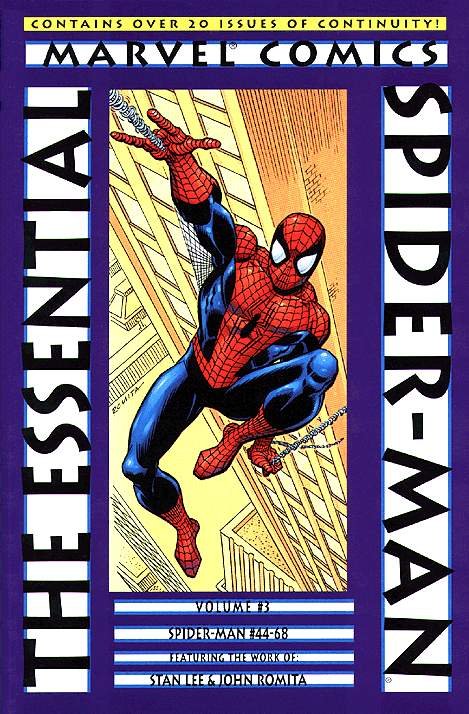
Spider-Man. The name alone conjures images of a wisecracking hero swinging through New York, grappling with villains, personal drama, and the crushing weight of "great responsibility." For over six decades, Peter Parker has been a cornerstone of the Marvel Universe, accumulating an astonishing 63 years' worth of stories. If you're standing on the precipice of diving into this legendary hero's comic book world, you're likely feeling a mix of excitement and absolute overwhelm. Where do you even begin with such a monumental legacy?
Fret not, fellow adventurer. You're not alone in wanting to untangle the web. This guide cuts through the noise, offering a curated path through the essential Spider-Man comic book reading arcs—the stories that truly define Peter Parker, shaped his world, and paved the way for the character we know and love today. We'll show you exactly where to start, what makes each arc special, and why it matters to your understanding of the wall-crawler.
At a Glance: Your Spider-Sense Guide
- Start Modern or Classic: You don't have to read everything in order. Modern reboots (like Ultimate Spider-Man) offer excellent entry points.
- Key Moments Matter: Some stories are pivotal for character development and understanding Peter's motivations.
- Understand the Universes: Most stories are in Earth-616, but alternate realities (like the Ultimate Universe) provide fresh takes.
- Collected Editions are Your Friend: Don't hunt down individual issues; look for trade paperbacks or omnibus editions.
- Enjoy the Journey: Spider-Man's world is vast and rich. Take your time, explore, and find what resonates with you.
Navigating the Web: Where to Start Your Spider-Man Journey
The beauty of Spider-Man's extensive history is that there are multiple on-ramps. You don't need to begin with Amazing Fantasy #15 (though it's a fantastic read for context!) to grasp the core of the character. Instead, think of these essential arcs as launchpads, each offering a distinct yet vital piece of the Spider-Man puzzle.
A Fresh Origin for a New Millennium: The Original Ultimate Spider-Man (2000-2009)
If the sheer volume of Spider-Man's classic continuity feels like a brick wall, the Ultimate Spider-Man series is your perfect slingshot over it. Launched in 2000, this series, primarily crafted by writer Brian Michael Bendis and artist Mark Bagley (later Stuart Immonen), wasn't just a reboot; it was a reimagining for a new generation. Set in the alternate Earth-1610, it retold Peter Parker's origin with modern sensibilities, making him a contemporary teenager facing contemporary problems.
What makes it essential? It offers a deeper, more emotional connection to Uncle Ben, making his death an even more profound, personal tragedy that underscores Peter's foundational principle: "With great power there must also come great responsibility." The series fleshed out supporting characters like Mary Jane Watson, Harry Osborn, and Norman Osborn in fresh ways, allowing new readers to grow up with Peter. It's concise, compelling, and utterly character-driven, making it perhaps the most accessible starting point for anyone new to Spidey.
The Heartbreaking Turning Point: The Night Gwen Stacy Died (The Amazing Spider-Man #121-122)
Once you've got a grasp on Peter Parker, it's time to understand the event that profoundly shaped him, perhaps more than any other besides Uncle Ben's death. "The Night Gwen Stacy Died," a two-part story from 1973 by Gerry Conway and Gil Kane, is not just a Spider-Man story; it's a seminal moment in comic book history.
In these issues, Spider-Man's long-time love interest, Gwen Stacy, meets a tragic end at the hands of the Green Goblin. This wasn't just a villain winning; it was a hero failing in the most devastating way possible. The raw, gut-wrenching grief and guilt Peter experiences here are palpable. This event solidified Gwen's death as Peter's prime motivating factor, an unshakeable inspiration to always work harder, to never let another person he cares about fall. Reading this arc helps you understand the deep emotional wellspring Peter draws from, explaining why he often struggles with happiness and why his victories always feel earned.
Revisiting the Early Years with Modern Eyes: Spider-Man: Blue
For a beautiful, nostalgic, and emotionally resonant look back at Peter Parker's beginnings, Spider-Man: Blue is an absolute must-read. This six-issue miniseries by the legendary team of Jeph Loeb and Tim Sale (part of Marvel's celebrated "color" series like Hulk: Gray and Daredevil: Yellow) isn't a retcon or a reboot. Instead, it’s Peter Parker, as an adult, reflecting on his earliest days as Spider-Man, specifically his relationships with Gwen Stacy, Mary Jane Watson, and Harry Osborn.
Told through Peter's internal monologue as he records his memories onto a tape recorder, Blue is a poignant exploration of first loves, first heartbreaks, and the sheer joy and terror of becoming a superhero. It captures the essence of Peter's youth with a modern sensibility, carrying crucial themes of love, loss, and growth that inform his entire future journey. It’s a perfect bridge between understanding the classic era and appreciating the emotional depth of the character.
Facing His Darkest Hour: Kraven's Last Hunt (Web of Spider-Man #31–32, The Amazing Spider-Man #293–294, Peter Parker, the Spectacular Spider-Man #131–132)
Sometimes, to truly understand a hero, you need to see them pushed to their absolute breaking point. "Kraven's Last Hunt," penned by J. M. DeMatteis with art by Mike Zeck, is widely regarded as one of Spider-Man's darkest and most critically acclaimed storylines. Spanning three different titles in 1987, this arc sees the obsessed hunter Kraven finally "defeat" Spider-Man, bury him alive, and then assume his identity to prove himself a superior "Spider-Man."
This isn't a typical superhero slugfest. It's a psychological thriller, a meditation on identity, madness, and the cycle of death and rebirth. Kraven, a long-time B-list villain, gains incredible depth here, turning the story into a character study of both hero and villain. Originally pitched as a Batman/Joker story, its cinematic quality and mature themes elevate it far beyond standard comic book fare. It's a profound look at what it means to be Spider-Man, even when someone else wears the suit.
When Fury Takes Over: Back in Black (The Amazing Spider-Man #539–543)
Fast forward to the mid-2000s, and Peter Parker is living in a very different world. "Back in Black," written by J. Michael Straczynski with art by Ron Garney, places Peter in an incredibly vulnerable and enraged state. Following the events of Civil War, where Peter publicly unmasked himself, his loved ones became targets. When a hit ordered by the Kingpin nearly kills Aunt May, Peter snaps.
Donning his classic black suit (a pre-Symbiote version, symbolizing his anger), Spider-Man goes on a brutal, no-holds-barred rampage to find the culprits. This arc showcases a darker, more vengeful side of Peter, pushing him to the edge of his moral boundaries. It's a stark reminder that even the most responsible hero can be driven to extremes by love and loss. While it famously leads into the controversial "One More Day" universe reset, "Back in Black" itself is a powerful exploration of Peter's emotional limits and his fierce protectiveness.
A Tabula Rasa for the Web-Slinger: Brand New Day (The Amazing Spider-Man #546 to #564)
Following the aforementioned "One More Day" storyline, "Brand New Day" represents a significant, if contentious, shift in Spider-Man's continuity. Kicking off in 2008, this arc, featuring a rotating team of writers (including Dan Slott, Bob Gale, and Marc Guggenheim) and artists, aimed to give Spider-Man a "fresh start." The most significant change? Peter Parker's marriage to Mary Jane Watson was erased from history.
Controversial as the premise was, "Brand New Day" offered an opportunity for new readers and old to jump in. It repositioned Peter as a single, struggling young adult, more akin to his classic portrayal. The arc introduced new ideas, characters like the villain Mister Negative, and themes that would remain prevalent in the Spider-Man comics for years. It's essential for understanding the modern landscape of Spider-Man, as it reset many narrative elements and allowed creators to explore new directions for the character without the baggage of decades of continuity.
The Ultimate Switcheroo: The Superior Spider-Man
What if Spider-Man wasn't Peter Parker at all? That's the mind-bending premise of The Superior Spider-Man, a bold and unforgettable run by Dan Slott, with art by Ryan Stegman, Humberto Ramos, and Giuseppe Camuncoli, which began in 2013. In this critically acclaimed arc, Doctor Octopus successfully transfers his consciousness into Peter Parker's body, leaving Peter's mind to seemingly perish. Otto Octavius, as "The Superior Spider-Man," vows to be a better, more efficient, and undeniably "superior" hero than Peter ever was.
This run is a masterclass in character development and moral complexity. Doc Ock's methods are ruthless, his ego immense, but his dedication to being a hero (on his own terms) is surprisingly compelling. Over approximately 1.5 years, readers witnessed Otto grapple with Peter's memories, developing a profound and emotionally resonant redemption story. The ramifications of his tenure, like the creation of Parker Industries, ripple through the Marvel Universe, making this an essential read for its sheer audacity and its deep exploration of heroism itself.
The Epic Multiversal Gathering: The Spider-Verse (2014)
If you've seen Spider-Man: Into the Spider-Verse or its sequel, you owe it to yourself to read the comic event that inspired them: "The Spider-Verse." Led by Dan Slott's writing with art by Olivier Coipel and Giuseppe Camuncoli, this 2014 multiversal extravaganza brought together every Spider-person imaginable. From the classic Peter Parker of Earth-616 to Spider-Gwen, Miles Morales, Spider-Man Noir, and even a Spider-Ham, they all unite to fight the Inheritors, a family of psychic vampires who hunt Spider-Totems across the multiverse.
This event isn't just a spectacle; it firmly established the "Spider-Family" as a crucial concept within Marvel, showcasing the universal appeal and diverse interpretations of the Spider-Man archetype. It's a celebration of everything Spider-Man can be, introducing countless new characters and concepts that have since become beloved staples. Understanding the comic book "Spider-Verse" is key to appreciating the broader impact and interconnectedness of Spider-Man across realities. If you're looking to explore the full breadth of what it means to be a hero with spider-powers, this is where you dive deep.
The Whole Life Story, All at Once: Spider-Man: Life Story
For a truly unique and ambitious reading experience, turn to Spider-Man: Life Story. This six-issue miniseries by Chip Zdarsky and Mark Bagley is a stroke of genius, offering a complete, cohesive biography of Peter Parker from beginning to end. Instead of being stuck in perpetual youth, Peter ages naturally from a young boy to an elderly man, with each issue covering a different decade of his life.
What makes it so remarkable is how Zdarsky and Bagley seamlessly weave in all the major canon events—from the Cold War and the Vietnam era to the Clone Saga and the modern age—recontextualizing them within a single, continuous lifespan. It’s not just a retelling; it’s an anthology that explores the cumulative impact of Peter's choices, triumphs, and tragedies. It's a thoughtful, emotional, and satisfying way to experience the entire breadth of Spider-Man's journey, making it a fantastic companion piece once you’ve familiarized yourself with some of his core stories.
A Bold New Beginning (Again): The New Ultimate Spider-Man, Vol. 1 (2023 - Present)
Just when you thought you had a handle on things, the Spider-Verse expands and reboots again! The 2023 launch of The New Ultimate Spider-Man, Vol. 1, by Jonathan Hickman and Marco Checchetto, introduces yet another fascinating alternate reality: Earth-6160. This series offers a truly fresh take by depicting Peter Parker as a fully-grown adult, married to Mary Jane Watson, and with children, before he ever gains his powers.
This innovative approach tackles a common fan desire: to see a more mature, established Peter Parker grappling with his powers and responsibilities from a different life stage. It’s an exciting alternative to the often-single, perpetually struggling 20-something Peter found in the main Earth-616 continuity. If you’re craving a Spider-Man who starts from a place of domesticity and family, this is the perfect entry point to witness a new kind of heroism unfold. It proves that even after decades, there are always new stories to tell about a man with great power and even greater responsibility.
Beyond the Arcs: Your Next Steps in the Spider-Verse
Reading these essential arcs will give you an unparalleled understanding of Peter Parker and the multifaceted world he inhabits. But the journey doesn't end there. Spider-Man's universe is constantly expanding, evolving, and offering new adventures.
Where to Find These Stories
- Collected Editions (Trade Paperbacks/Omnibus): This is by far the easiest and most cost-effective way to read these arcs. Most of the stories listed above are available in beautifully bound trade paperbacks or larger, more comprehensive omnibus editions. Check your local comic shop or online retailers.
- Digital Platforms: Marvel Unlimited is an excellent subscription service that offers access to tens of thousands of Marvel comics, including nearly all Spider-Man stories, a few months after their print release. ComiXology (Amazon Kindle Comics) also offers digital purchases of individual issues and collected editions.
- Libraries: Don't overlook your local library! Many libraries have robust graphic novel sections.
Understanding the Multiverse
The "Earth-616" designation refers to Marvel's main, primary continuity, where most classic and ongoing stories take place. The "Ultimate Universe" (Earth-1610 for the original, Earth-6160 for the new 2023 series) is an entirely separate reality designed to be a clean slate, free from decades of continuity. Don't worry too much about keeping them straight at first; the stories themselves usually make it clear which universe you're in. The important thing is to understand that different Peters exist, each with their own unique journey.
The Endless Web of Storytelling
As you dive into these tales, you'll inevitably stumble upon references to other characters, events, and a rich tapestry of lore. Don't feel pressured to understand everything immediately. Part of the joy of comics is discovering these connections organically. Follow what interests you. Did you love Gwen Stacy? There are more stories featuring her. Fascinated by a particular villain? Explore their history. The rabbit hole goes deep, but it's a wonderfully rewarding descent.
To truly immerse yourself in the broader world of the web-slinger and all his incredible adventures, you can always Explore the Spiderman Watcher hub for even more insights and guides. The Spider-Man universe is a vibrant, ever-changing landscape, and these foundational arcs are your perfect roadmap to navigating its incredible scope.
Your Adventure Awaits
Stepping into the world of Spider-Man comics is an exciting venture. By focusing on these essential reading arcs, you're not just reading stories; you're tracing the evolution of a cultural icon. You'll witness Peter Parker's triumphs, empathize with his heartbreaks, and come to understand why he remains one of the most relatable and beloved heroes in all of fiction. Pick an arc that sparks your interest, settle in, and prepare to be amazed. Your friendly neighborhood Spider-Man is waiting.