Ever felt like you need a dimensional map just to keep up with all the Spider-People swinging across realities? You're not alone. The concept of the multiverse has exploded in popularity, and at its tangled heart lies the vibrant, ever-expanding world of The Spider-Verse. Far more than just a collection of alternate Spider-Men, it's a dynamic tapestry of characters, unique rules of "canon," and an intricate multiversal logic that, while connected to the wider Marvel cosmos, operates on its own distinct principles. If you've ever wondered how Miles Morales' world connects to Tobey Maguire's, or what "glitching" really means, you've come to the right place.
This guide is your definitive primer to understanding the Spider-Verse in all its glorious, chaotic, and utterly spectacular forms.
At a Glance: Untangling the Spider-Web of Realities
- Distinct but Connected: The Spider-Verse and the MCU Multiverse are both part of the same broader Marvel Multiverse but follow different internal rules.
- Infinite Possibilities: An endless number of parallel realities exist, where interactions between them often lead to chaos.
- Spider-Society vs. TVA: The Spider-Verse has Miguel O’Hara’s Spider-Society monitoring universes, while the MCU has the TVA safeguarding timelines.
- Travel Tech: Spider-Society uses dimensional watches to prevent "glitching" during travel; the MCU uses magic, Quantum Realm tech, or TVA TemPads.
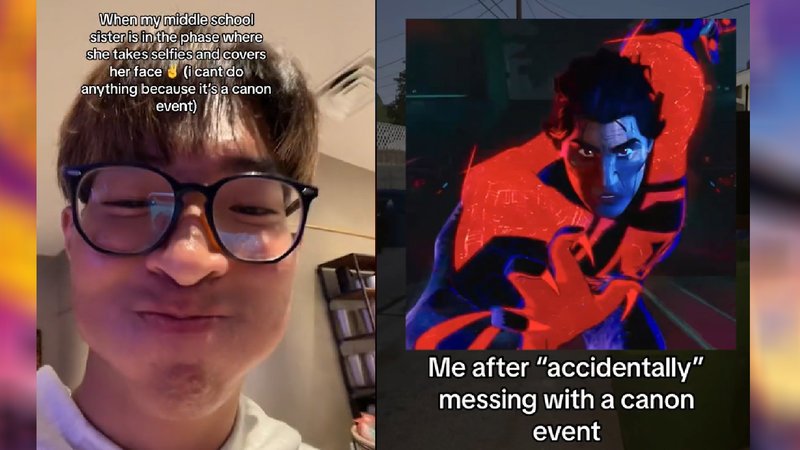
- Canon Events: Spider-Verse characters face "canon events" – flexible, unavoidable life milestones (like a spider bite or a loved one's death).
- Universe Numbering: Be prepared for confusion! The MCU's Earth-616 is not the Spider-Verse's Earth-616, nor is it the original Marvel Comics' Earth-616.
- Character Focus: The Spider-Verse primarily centers on beings with spider powers, while the MCU explores a broader range of heroes and villains.
More Than Just Parallel Worlds: What is the Spider-Verse?
At its core, the Spider-Verse is an interconnected web of every universe that features a Spider-Person. Think of it as a vast, sprawling family tree where every branch is a different reality, and on many of those branches, a variant of Spider-Man (or Woman, or Ham, or Robot) is swinging. This isn't just about the animated films; it encompasses every Spider-Person across all media, from decades-old comic books to live-action blockbusters and video games.
While Sony's Spider-Verse movies (like Into the Spider-Verse and Across the Spider-Verse) vividly bring this concept to life, it’s crucial to understand that the Spider-Verse and the Marvel Cinematic Universe (MCU) Multiverse are two distinct but interconnected parts of the same larger Marvel Multiverse. Imagine a massive cosmic ocean. The MCU is one powerful current, and the Spider-Verse is another. They exist in the same ocean, they can affect each other, but they operate under their own sets of physics and governing bodies.
The clearest merging point between these two concepts, and arguably the moment many viewers truly grasped the magnitude of multiversal possibilities, was the appearance of Tobey Maguire's, Andrew Garfield's, and Tom Holland's Spider-Men together in Spider-Man: No Way Home. This cinematic event cemented the idea that these different live-action interpretations are indeed variants of the same hero, existing across parallel realities.
Who's in Charge Here? Multiversal Authorities Explained
When you're dealing with infinite realities, someone has to try and keep the peace (or at least, their version of it). Both the Spider-Verse and the MCU have established powerful, if morally grey, organizations dedicated to monitoring and managing multiversal integrity.
The Spider-Society: Vigilantes of the Web
Born from the necessity of preserving universes with a Spider-Person, the Spider-Society was founded by the intense, driven Miguel O’Hara, better known as Spider-Man 2099. Unlike the TVA, this isn't a shadowy government agency forcing conscription. Members, a vast and vibrant array of Spider-People from every conceivable reality, join willingly. Their mission is clear: monitor universes, protect the fabric of reality, and enforce the "canon" of a Spider-Person's journey.
However, "willingly" doesn't always mean "without disagreement." As seen in Across the Spider-Verse, Miguel's rigid adherence to canon events and his methods can lead to stark philosophical clashes among the ranks. It's a society of heroes, yes, but one grappling with immense responsibility and the cost of maintaining order.
The TVA: Guardians of the Sacred Timeline (and Beyond)
In the MCU, the equivalent authority is the Time Variance Authority (TVA). Originally established by He Who Remains (a benevolent variant of Kang the Conqueror) to safeguard a single "Sacred Timeline" and prevent multiversal war, the TVA operates on a different scale and with a more chilling methodology. Its agents are regular people, often variants themselves, who've been brainwashed into service, unaware of their past lives.
After the events of Loki Season 1, the TVA's mission evolved, becoming a body that now protects all timelines, not just one. While both the Spider-Society and the TVA aim to prevent multiversal collapse, their origins, recruitment, and operational ethics are vastly different.
Crossing the Divide: How Multiverse Travel Works (and What It Costs)
Traveling between universes is never a casual affair. Whether you're a web-slinger or a sorcerer, there are specific mechanisms, and often severe consequences, for hopping realities.
Spider-Verse Travel: Watches, Glitches, and the "Go Home Machine"
In the Spider-Verse, the primary method for interdimensional travel, particularly for the Spider-Society, involves advanced technology. They utilize a specialized dimensional watch that stabilizes travelers within foreign universes, preventing a painful and dangerous phenomenon known as "glitching." Without a watch, a traveler's molecular structure destabilizes, causing them to malfunction like a corrupted digital file, eventually getting stuck and suffering agonizing side effects. This is precisely what Miles Morales' Peter B. Parker experienced early on in Into the Spider-Verse.
The Spider-Society also employs a "Go Home Machine" to send displaced individuals back to their correct realities. While seemingly efficient, the stakes of multiversal interference are incredibly high. Miguel O’Hara himself learned this the hard way: by attempting to replace a deceased variant of himself in a different universe, he inadvertently caused that entire universe's collapse. This devastating experience fuels his strict, unyielding philosophy regarding canon events.
MCU Travel: Quantum Realm, Magic, and TemPads
The MCU offers a broader toolkit for multiversal traversal:
- Magic: Powerful sorcerers like Scarlet Witch can "Dreamwalk," projecting their consciousness into variants in other universes.
- Technology: The Avengers famously used special suits, platforms, and bracelets linked to the Quantum Realm to travel through time and between realities.
- TVA Tech: The TVA employs TemPads, advanced devices that create door-like portals to any point in time or space across the multiverse.
The consequences of interference in the MCU are also dire. Unchecked multiversal interference can lead to "incursions," cataclysmic clashes between universes that result in the destruction of one or both realities. Characters generally don't suffer "glitching" side effects like those in the Spider-Verse, but prolonged use of dark magic (like the Darkhold) can corrupt users. Loki, after He Who Remains' death, developed a unique "Time-Slip" ability, uncontrollably jumping through his own timeline. However, some characters, such as Steve Rogers, Gamora, and Sylvie, have been able to stay in other universes without causing immediate incursions, suggesting nuances in these rules based on intent, scale, or the specific magic/technology used.
The Fabric of Fate: Canon Events vs. Absolute Points
Both multiversal frameworks acknowledge that certain events are destined to occur, shaping heroes and realities in profound ways. However, their definitions of "destiny" differ.
Spider-Verse's Canon Events: The Unavoidable Milestones
The Spider-Verse operates on the principle of "canon events." These are flexible, yet unavoidable, milestones that every Spider-Person must experience for their universe to remain stable and for them to become the hero they are meant to be. These aren't precise moments but rather archetypal experiences, such as:
- The initial spider bite: The origin of their powers.
- The death of a captain: Often a police captain or a similar authority figure close to the Spider-Person.
- The death of a loved one: The profound loss that drives their heroic journey.
While the circumstances of these events can vary wildly from one universe to another, the event itself is deemed essential. Preventing a canon event, according to Miguel O'Hara, risks the collapse of that entire reality, a belief born from his own tragic experience. It's a heavy burden, forcing Spider-People to confront immense suffering as an inescapable part of their heroic identity.
MCU's Absolute Points: Strict, Unchangeable Destiny
In the MCU, the concept is closer to "absolute points" in a timeline. These are strict, non-negotiable events that are destined to occur, and attempting to change them could unravel the entire fabric of reality. For instance, Doctor Strange's tragic loss of Christine Palmer is an absolute point; no matter how many times he tried to alter it, fate found a way to ensure her death, ultimately leading him to accept his role as Sorcerer Supreme. These events are often tied to the very existence or progression of a timeline's most pivotal figures.
While both canon events and absolute points deal with destiny, canon events in the Spider-Verse emphasize the shared, almost ritualistic, suffering of all Spider-People, forming a common bond through pain. Absolute points in the MCU tend to be more specific to individual characters or critical timeline junctures.
A Shared Canvas? Universe Integration and Interaction
Understanding what properties exist within each multiversal sphere helps clarify their reach.
What Belongs in the Spider-Verse: A Kaleidoscope of Media
The Spider-Verse is incredibly inclusive. It encompasses:
- Animated Universes: The vivid, unique art styles of Into the Spider-Verse and Across the Spider-Verse naturally bring together characters from dimensions like LEGO Spider-Man (Earth-13122), Spectacular Spider-Man, and even Insomniac's Spider-Man from the video games.
- Live-Action Properties: Crucially, the Spider-Verse acknowledges existing live-action Marvel properties beyond the MCU, including Sony's Venom and The Amazing Spider-Man films. The visual gag of Miguel O'Hara interacting with the 1967 animated Spider-Man is a testament to this broad embrace.
What's fascinating is how these different formats interact. Spider-Verse movies feature characters from diverse artistic styles—anime, black-and-white noir, 8-bit, 3D-animated—all appearing in their original, distinctive forms. This visual mosaic is a core part of its identity.
What Belongs in the MCU: A More Centralized Structure
The MCU, while expanding its multiverse, has a more centralized structure:
- Main Timeline: Its primary universe, often referred to as Earth-199999 or, within the MCU itself, Earth-616.
- Other Marvel Properties: It has integrated characters from Fox's Marvel movies (like the X-Men) and introduced alternate realities such as Earth-838 (home of the Illuminati).
However, the MCU has not yet directly hinted at or visually integrated the distinct art styles or specific characters from the animated Spider-Verse films. While Tom Holland's Spider-Man has met variants from other live-action Sony films, the MCU primarily keeps its characters in a consistent visual style, though Doctor Strange and America Chavez notably changed appearances while traversing realities in Multiverse of Madness.
When Rules Are Broken: Consequences for Multiverse Violations
Breaking multiversal rules comes with severe repercussions, though the severity and nature of punishment differ significantly between the two governing bodies.
Spider-Society's Approach: Containment and Correction
The Spider-Society, while firm, leans more towards containment and correction. Agents are tasked with apprehending offenders who disrupt the multiversal balance or interfere with canon events. Once captured, these "anomalies" are typically:
- Imprisoned: Held in secure facilities within Spider-Society headquarters.
- Warned/Sent Home: In some cases, like with Donald Glover’s variant of The Prowler, they might receive a stern warning and be sent back to their original universe.
The goal is often to prevent further damage and to re-stabilize the affected realities.
TVA's Harsh Justice: Erasure and Psychological Torture
The TVA's methods are far more brutal and absolute. Violations of the Sacred Timeline (or now, any timeline) are met with unyielding force:
- Disintegration: Variants who deviate from their predetermined path are "pruned," meaning they are disintegrated and sent to the Void, an end-of-time realm where they are devoured by the monstrous entity Alioth.
- Arrest and Torture: Other variants might be arrested and subjected to psychological torture in order to "reset" their timelines and prevent branching realities.
The TVA's justice system prioritizes the existence of specific timelines above all else, often at a terrifying cost to individual free will.
The Great Numbering Debate: Understanding Earth-616 (and Others)
Here's where things get a little confusing, even for seasoned multiverse explorers. The numbering of universes is inconsistent across different properties, and it's a prime example of how the Spider-Verse and MCU, while connected, operate with different internal classifications.
- MCU's Main Timeline: The Avengers' main timeline is referred to as Earth-616 within the MCU itself (e.g., by Mysterio and Doctor Strange). However, to the Spider-Society, this same reality is designated Earth-199999.
- Original Marvel Comics: The original universe where Marvel Comics' stories unfolded is also canonically Earth-616.
- Peter B. Parker's Home: The older, more jaded Peter B. Parker from Into the Spider-Verse hails from Earth-616B.
This inconsistency isn't necessarily a mistake; it highlights that different multiversal entities might have their own indexing systems. It's a reminder that what one organization calls "home," another might call "just another variant."
Who We're Watching: Focus on Spider-People vs. Broader Marvel
Finally, the core focus of the narratives themselves diverges.
- The Spider-Verse: Its stories are laser-focused on beings who gain their powers from a spider bite, a similar incident, or a deep connection to the "Web of Life and Destiny." It's an exploration of responsibility, destiny, and what it means to be Spider-Man (or Woman, or Ham).
- The MCU: While Spider-Man is a pivotal character, the MCU's multiversal saga shares its focus across a much broader array of characters and their variants. Major players like Kang the Conqueror, Doctor Strange, Loki, and the Fantastic Four are all central to its multiversal narratives. It's about the entire Marvel cosmos, not just its web-slinging inhabitants.
Meet the Multiverse's Mightiest (and Most Diverse) Spiders: A Character Compendium
The true joy of the Spider-Verse lies in its incredible cast of characters, each a unique reflection of the Spider-Man archetype. Here’s a closer look at some key Spider-People and the universes they call home:
- Earth Number: A unique identifier for each parallel universe, allowing for precise navigation and tracking within the multiverse.
- Earth-616 (Original Comic Universe): Peter Parker
- Origin: Bitten by a radioactive spider.
- Introduction: First appeared in 1962, though labelled as '1980s' in some Spider-Verse contexts.
- Key Trait: The foundational Spider-Man, distinct from the MCU’s Earth-616/199999.
- Earth-67 (1967 TV Series): Peter Parker
- Origin: Radioactive spider bite.
- Powers: Superhuman Strength, Agility, the ability to stick to surfaces, and an intuitive Spider-Sense.
- Key Trait: The iconic, often memed, animated Spider-Man from the classic cartoon.
- Earth-96283 (Raimiverse): Tobey Maguire's Spider-Man
- Origin: Genetically-altered spider bite.
- Powers: Organic web-shooters from his wrists, enhanced strength, agility, and Spider-Sense.
- Love Interest: Mary Jane Watson.
- Key Trait: The first cinematic Spider-Man for a generation, defined by his earnestness and significant personal sacrifice.
- Earth-120703 (Amazing Spider-Man): Andrew Garfield's Spider-Man
- Origin: Genetically modified spider bite.
- Powers: Enhanced strength, agility, Spider-Sense, and relies on mechanical web-shooters.
- Love Interest: Gwen Stacy.
- Key Trait: A more brooding, agile, and scientifically-minded Peter Parker, haunted by his past failures.
- Earth-199999 (Marvel Cinematic Universe - MCU): Tom Holland's Spider-Man
- Origin: Radioactive spider bite.
- Mentored By: Tony Stark (Iron Man).
- Love Interest: Michelle Jones (MJ).
- Key Trait: A youthful, tech-savvy Spider-Man who became a global hero, notably visited by Tobey (E-96283) and Andrew (E-120703) in No Way Home. For a deeper dive into the wall-crawler's adventures across all his forms, you can Explore all things Spider-Man.
- Earth-1610 (Setting of Spider-Man: Into The Spider-Verse):
- Blonde Peter Parker: The original Spider-Man of this universe, tragically killed by Kingpin.
- Miles Morales: Bitten by a radioactive spider from Earth-42, he gains unique powers including invisibility ("camo") and bio-electricity ("venom blast"), becoming the new Spider-Man of his reality.
- Earth-65: Gwen Stacy / Spider-Gwen (Ghost-Spider)
- Origin: Bitten by a radioactive spider.
- Key Trait: In her universe, Peter Parker became the Lizard and died in her arms, fueling her guilt and driving her heroism. She's a skilled drummer and detective.
- Earth-616B: Peter B. Parker
- Origin: Radioactive spider bite.
- Key Trait: An older, more jaded but ultimately good-hearted Spider-Man, married to Mary Jane Watson and father to Mayday Parker. He serves as a mentor to Miles.
- Earth-8311: Peter Porker / Spider-Ham
- Origin: A spider bitten by a radioactive pig.
- Key Trait: A cartoon pig with spider powers, bringing slapstick humor and a unique visual style to the Spider-Verse.
- Earth-14512: Peni Parker / SP//dr
- Origin: A Japanese girl from the year 3145 with a psychic link to a spider, piloting a powerful robot suit.
- Key Trait: A blend of cyberpunk and anime aesthetics, bringing technological prowess to the team.
- Earth-90214: Spider-Man Noir
- Origin: Peter Parker from the 1930s, bitten by an ancient spider from an idol.
- Key Trait: A black-and-white aesthetic, hardened by his pulp detective-style world, speaking in a distinct anachronistic dialect.
- Earth-928 (2099): Miguel O’Hara / Spider-Man 2099
- Origin: From the year 2099, his DNA was accidentally spliced with a spider's after an experimental drug addiction procedure.
- Key Trait: Possesses talons, fangs, and organic web-shooters, he's a highly intelligent but grim leader of the Spider-Society, dedicated to preserving the multiverse.
- Jessica Drew / Spider-Woman (Earth Unknown)
- Origin: Gained her powers from an experimental serum and genetic modification.
- Key Trait: A powerful, experienced, and very pregnant Spider-Woman who rides a motorcycle, offering a strong, independent female presence.
- Earth-50101: Pavitr Prabhakar / Spider-Man India
- Origin: Powers bestowed by an ancient yogi (the Spider-Totem).
- Key Trait: A vibrant, enthusiastic hero from Mumbattan, bringing a rich cultural flavor to the Spider-Verse.
- Earth-138: Hobart ‘Hobie’ Brown / Spider-Punk
- Origin: Bitten by a spider from an illegal chemical dumping ground.
- Key Trait: A fiercely independent, anti-establishment hero with a punk rock aesthetic, wielding a guitar that also doubles as a weapon.
- Earth-22191: Margo Kess / Spider-Byte
- Origin: Exists primarily in a virtual world.
- Key Trait: Fights cybercrime with digital spider powers, representing the boundless forms Spider-People can take.
- Earth-13122: Lego Spider-Man
- Origin: Classic spider bite.
- Key Trait: Appears in a distinct Lego block form, adding a playful, toy-like dimension.
- Earth-42: Miles Morales (The Prowler)
- Origin: Left without a Spider-Man after its genetically altered spider bit Miles Morales of Earth-1610.
- Key Trait: This universe's Miles Morales, without a spider bite, never became Spider-Man and instead embraced the identity of The Prowler, a stark contrast to his heroic counterpart.
Beyond the Web-Slingers: Other Connected Sony Properties
Sony's universe of Marvel characters also intersects with the wider multiversal landscape, even if they don't directly feature a Spider-Man (yet).
- Earth-688B: Tom Hardy's Venom (2018, 2021)
- Key Trait: Eddie Brock forms a symbiotic relationship with an alien Klyntar named Venom. This version of Venom briefly appeared in an MCU (Earth-199999) end-credit scene in Spider-Man: No Way Home, hinting at the porous borders between these cinematic universes.
- Earth-688B: Morbius (2022)
- Key Trait: Set in the same universe as Tom Hardy's Venom, this film features Dr. Michael Morbius, who gains vampiric powers while trying to cure his rare blood disease. This universe has famously not yet seen a Spider-Man, leaving fans to wonder when (or if) he might eventually appear.
These films underscore how diverse and sprawling the larger Marvel Multiverse truly is, even in corners where the friendly neighborhood Spider-Man has yet to make his debut.
Your Burning Multiverse Questions, Answered
The multiverse is complex, and it naturally sparks many questions. Let's tackle some common ones.
Is the MCU's Earth-616 the real Earth-616?
No, not in the traditional sense for long-time comic fans. While the MCU calls its main timeline Earth-616, the original Marvel Comics universe has always been designated Earth-616. The Spider-Society even calls the MCU's reality Earth-199999. This is a deliberate creative choice that underscores the idea of infinite realities and differing classifications, reinforcing that no single universe holds ultimate authority over numbering conventions.
Can anyone travel the multiverse?
Not safely or easily. While advanced beings, powerful magic users, or those with specific technology (like dimensional watches or TemPads) can traverse realities, it's not something an ordinary person can do without severe consequences. Accidental crossings often lead to "glitching" in the Spider-Verse or risk of incursions in the MCU.
Why are there so many Spider-People?
The core premise is that the "spider-totem" – the source of a Spider-Person's powers and destiny – exists across infinite realities. Therefore, in any universe where a spider-totem finds a suitable host, a Spider-Person can emerge. It's a fundamental multiversal archetype, endlessly reinterpreted through different cultures, time periods, and species.
Navigating the Infinite: What the Future Holds for the Spider-Verse
The Spider-Verse, much like the broader Marvel Multiverse, is still an unfolding story. With each new film, comic, or game, our understanding of its characters, canon, and cosmic logic deepens. The ongoing narrative promises more intricate web-slinging action, emotional stakes, and profound questions about destiny versus free will. As the lines between universes continue to blur, one thing remains clear: the Spider-Verse offers an infinite playground of possibilities, proving that anyone, from any reality, can wear the mask. And it’s an adventure we can’t wait to keep exploring.